How AI is Changing SEO: A Guide to GEO vs. Traditional SEO
Search engines are evolving. SEO is no longer only about ranking on Google — now websites also need to appear in AI-powered search tools like ChatGPT and other generative engines.
This shift has introduced a new concept called Generative Engine Optimization (GEO).
In this guide, you’ll learn how AI is changing SEO and what you need to do to stay visible in the future of search.
If you're new to SEO basics, start with our Website SEO Audit Guide.
What is Traditional SEO?
Traditional SEO focuses on optimizing websites to rank in search engines like Google and Bing. It involves a mix of technical and creative elements to improve visibility.
- Keyword Optimization: Targeting specific terms users search for.
- Backlinks: Building authority through external links.
- Technical SEO: Ensuring site speed and crawlability.
- On-page Optimization: Tuning meta tags and content structure.
- Content Creation: Providing value to the reader.
The goal is to appear higher in search results when users type queries. If your website is not ranking well, read Why Your Website Is Not Ranking on Google.
What is GEO (Generative Engine Optimization)?
GEO is the process of optimizing your content so AI search engines can understand and recommend your website. Unlike traditional search, AI tools don’t just show links — they generate direct answers.
Examples of AI search platforms include:
- AI chat search (ChatGPT, Claude)
- Answer engines (Perplexity)
- AI assistants (Google Gemini, Microsoft Copilot)
To succeed in GEO, your content must be clear, structured, helpful, and easy to understand.
SEO vs. GEO: Key Differences
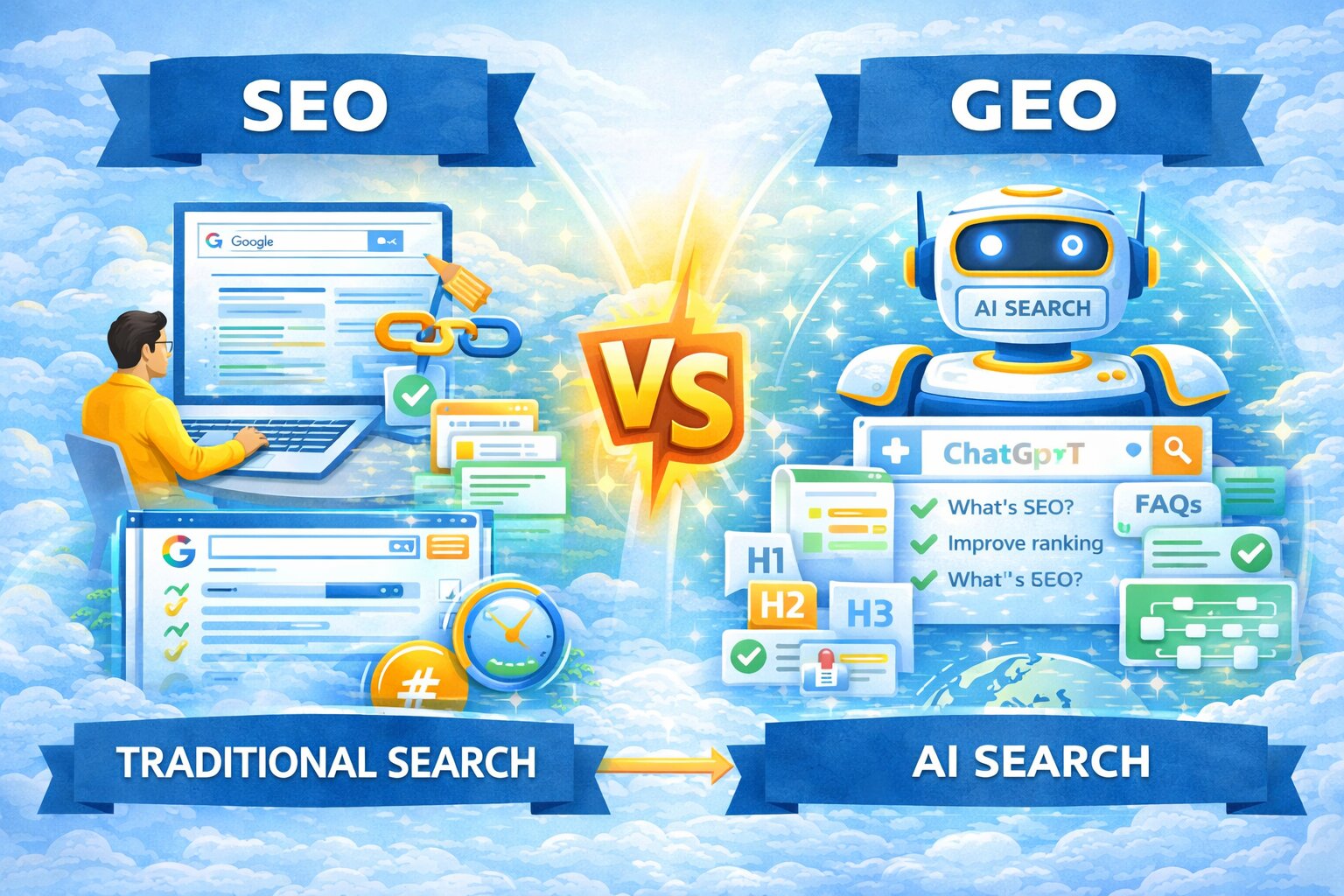
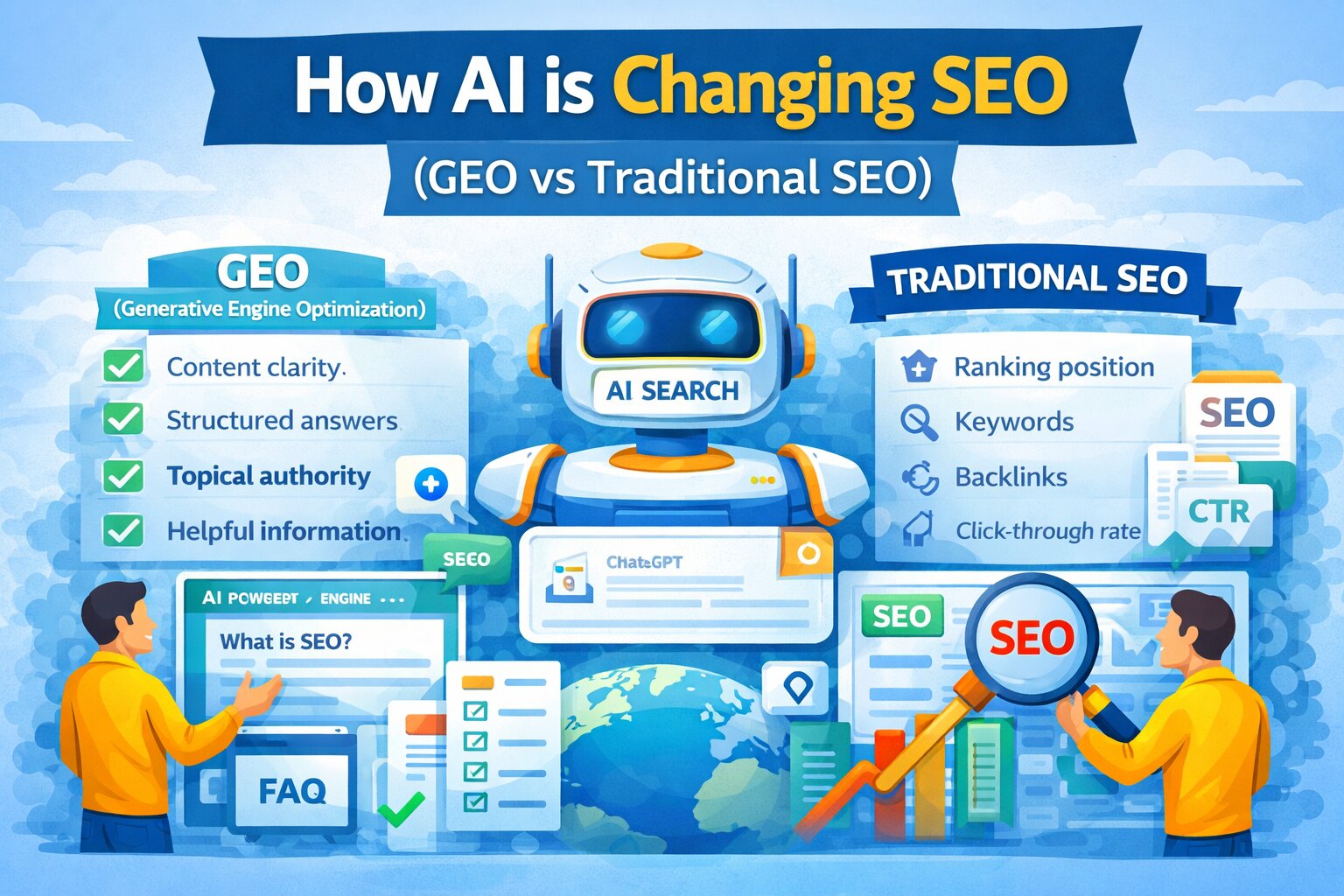
FeatureTraditional SEOGEO (AI SEO)Primary FocusRanking position & CTRContent clarity & relevanceKey MetricsKeywords & BacklinksTopical authority & structureOutputList of blue linksSynthesized direct answers
Websites that combine SEO + GEO will perform best in the modern digital landscape.
Why AI Search is Important
More users are searching using AI tools instead of traditional search engines. AI search prioritizes sites that provide instant summaries and value structured content over keyword density.
How to Optimize for GEO (AI SEO)
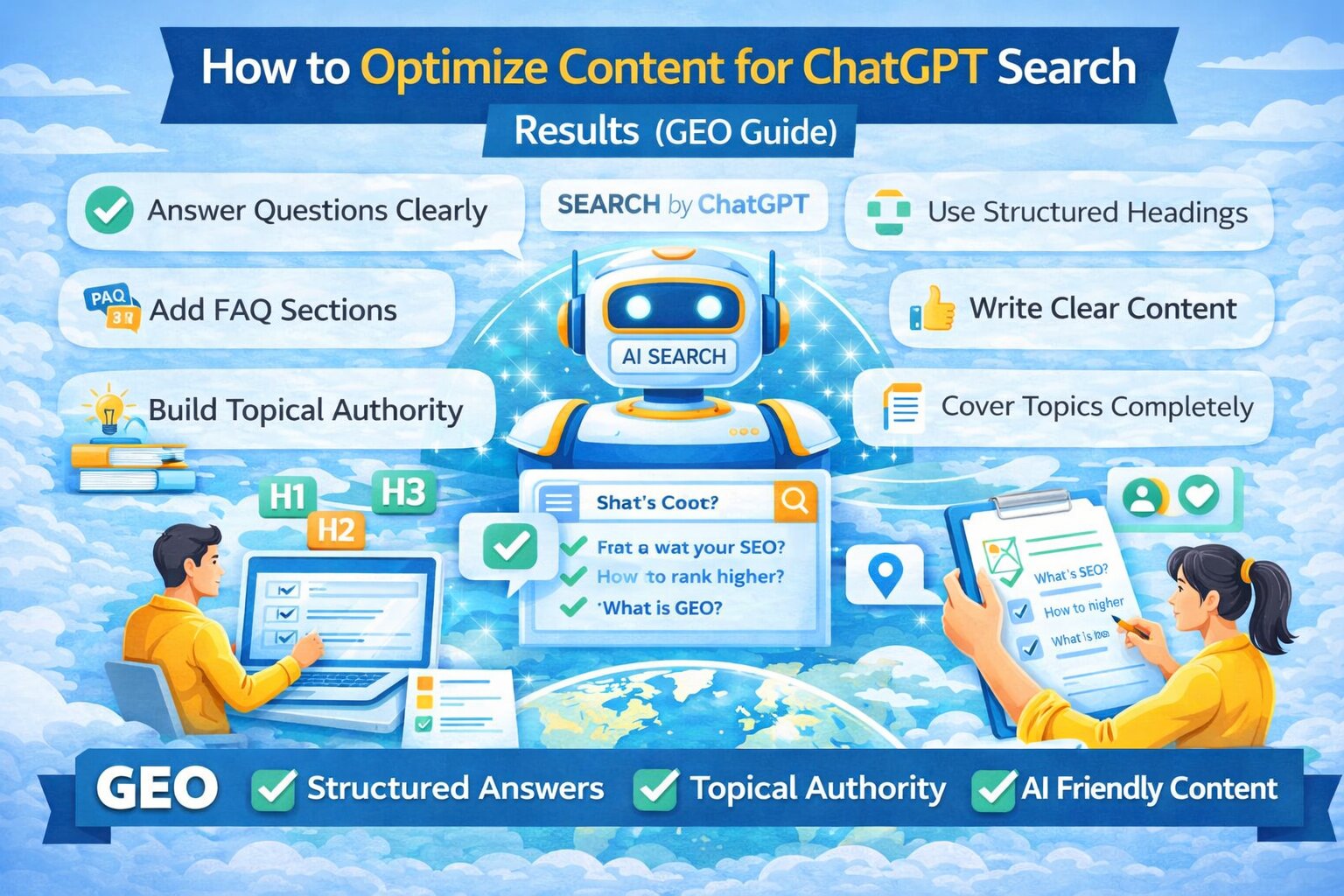
1. Provide Clear Answers
AI tools prefer content that answers questions directly. Use simple language and clear explanations in your introductory paragraphs.
2. Add FAQ Sections
FAQs help AI understand your content better. Common questions include:
- What is SEO?
- How to improve rankings?
- How to fix SEO issues?
See examples in our On-Page SEO Checklist.
3. Use Proper Heading Structure
Structured content is easier for AI to parse. Stick to the hierarchy:
- H1: Main Topic
- H2: Major Sections
- H3: Specific Subtopics
4. Build Topical Authority
AI prefers websites that cover topics deeply rather than surface-level content. Create "Topic Clusters" such as:
- SEO Audit Guides
- Technical SEO deep-dives
- Content strategy maps
Explore our SEO Audit Checklist for more details.
5. Use Structured Data (Schema Markup)
Schema markup tells AI exactly what your content is. Essential types include FAQPage, BlogPosting, and Organization.
6. Write for Humans First
Avoid keyword stuffing. AI is trained to recognize helpful, readable content. If it provides value to a human, it’s more likely to be cited by an AI.
How Ranknova Helps with GEO
Ranknova bridges the gap between traditional search and AI discovery. Our tools help you:
- Detect missing FAQ sections
- Identify content gaps
- Suggest structured data improvements
Get started with our How to Improve SEO in 30 Days plan.
Conclusion: The Future of SEO
SEO is not ending; it is evolving. The future belongs to websites that optimize for search engines, AI engines, and human users simultaneously.
Take the Next Step
👉 Run your free SEO audit with Ranknova and optimize your website for both SEO and AI search today.
FAQ
Frequently Asked Questions
Quick answers pulled directly from this article for easier reading and better sharing previews.
What is GEO in SEO?
GEO stands for Generative Engine Optimization, which focuses on optimizing content for AI-powered search engines.
Is traditional SEO still important?
Yes, traditional SEO is still essential for rankings.
How can I optimize for AI search?
Use structured content, clear answers, FAQs, and schema markup.
Will AI replace search engines?
AI is changing search, but traditional search engines still play a major role.