Ultimate SEO Audit Checklist: Free Template to Fix Issues Fast
If you want to improve your website rankings, a comprehensive SEO audit is your first step. This 2026 updated checklist provides a step-by-step roadmap to identify and resolve critical SEO bottlenecks.
What is an SEO Audit Checklist?
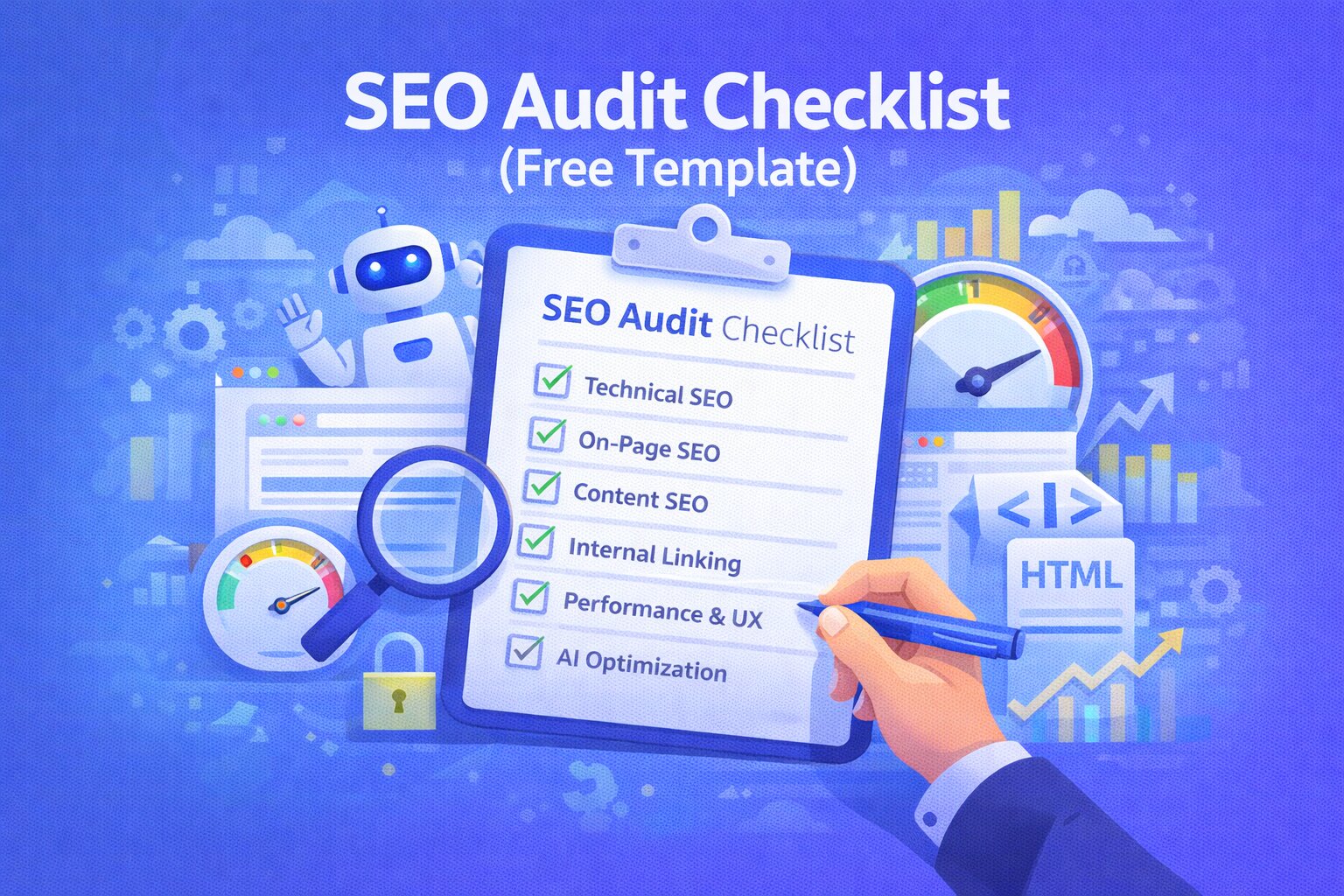
An SEO audit checklist is a structured framework used to evaluate a website's search engine health. It ensures your site meets the latest algorithmic requirements across four key pillars:
- Technical SEO: Backend site health and crawlability.
- On-Page SEO: Individual page optimization.
- Content Quality: Value, relevance, and E-E-A-T.
- User Experience (UX): Site speed and mobile responsiveness.
1. Technical SEO Checklist
Technical issues are often "silent killers." If search bots can't crawl your site, your content won't exist in search results.
- Crawlability: Ensure search engines aren't blocked in
robots.txt. - Sitemap:
sitemap.xmlis present, updated, and submitted to Search Console. - SSL/HTTPS: Website is secure with a valid SSL certificate.
- Status Codes: Fix all 404 (Broken Links) and 500 (Server) errors.
- Canonicalization: Use
rel="canonical"to prevent duplicate content penalties. - Site Speed: Pass Core Web Vitals (LCP, FID, CLS).
2. On-Page SEO Checklist
Optimize every individual element to signal relevance to Google.
- Meta Titles: Unique, keyword-rich titles for every single page.
- Meta Descriptions: Compelling summaries that improve Click-Through Rate (CTR).
- Header Hierarchy: Use only one H1 per page, followed by H2 and H3 tags.
- Image Optimization: Descriptive Alt Text added to all images for accessibility and SEO.
- URL Structure: Short, descriptive URLs (e.g.,
/seo-audit-checklist/).
3. Content & Internal Linking Checklist
Content is still king, but only if it's discoverable and useful.
- User Intent: Does the content actually answer the searcher's question?
- Keyword Density: Use primary and LSI keywords naturally (avoid stuffing).
- Internal Links: Link to at least 2-3 other relevant pages on your site.
- No Orphan Pages: Ensure every page is linked from at least one other page.
- Readability: Use short sentences, bullet points, and active voice.
4. AI & GEO Optimization (The 2026 Standard)
With the rise of AI search, your content must be structured for machine readability.
- FAQ Schema: Add structured data to help AI provide direct answers.
- Direct Answers: Provide clear 1-2 sentence definitions for key terms early in the text.
- Schema Markup: Implement
Article,Organization, orProductschema.
How to Execute Your Audit
- Crawl: Use an SEO tool to identify technical errors automatically.
- Prioritize: Fix high-impact issues (Speed, Indexing) first.
- Optimize: Update meta tags and headers based on keyword research.
- Monitor: Use Ranknova or Search Console to track your ranking improvements.
Ready to automate your audit?
Don't spend hours checking manual lists. Get a prioritized report in seconds.
FAQ
Frequently Asked Questions
Quick answers pulled directly from this article for easier reading and better sharing previews.
What is an SEO audit checklist?
A list of tasks to evaluate and improve your website’s SEO performance.
How often should I use an SEO checklist?
At least once a month.
Can beginners use this checklist?
Yes, it’s designed for both beginners and professionals.
What is the best SEO audit tool?
Tools like Ranknova help automate the entire process.