How to Write Blog Posts That Rank on Google (Step-by-Step Guide)
Writing a blog is easy. Writing a blog that ranks on Google is not.
Many blogs fail to rank because they ignore SEO basics like keyword research, content structure, and user intent. In this guide, you’ll learn how to write blog posts that rank step-by-step.
If you are new to SEO, start with our SEO Audit Guide.
Why Most Blog Posts Don’t Rank
Common reasons include:
- No keyword research
- Poor content structure
- Weak headings
- Low-quality content
- No internal linking
Avoid these mistakes to improve rankings. Learn more in Common SEO Mistakes.
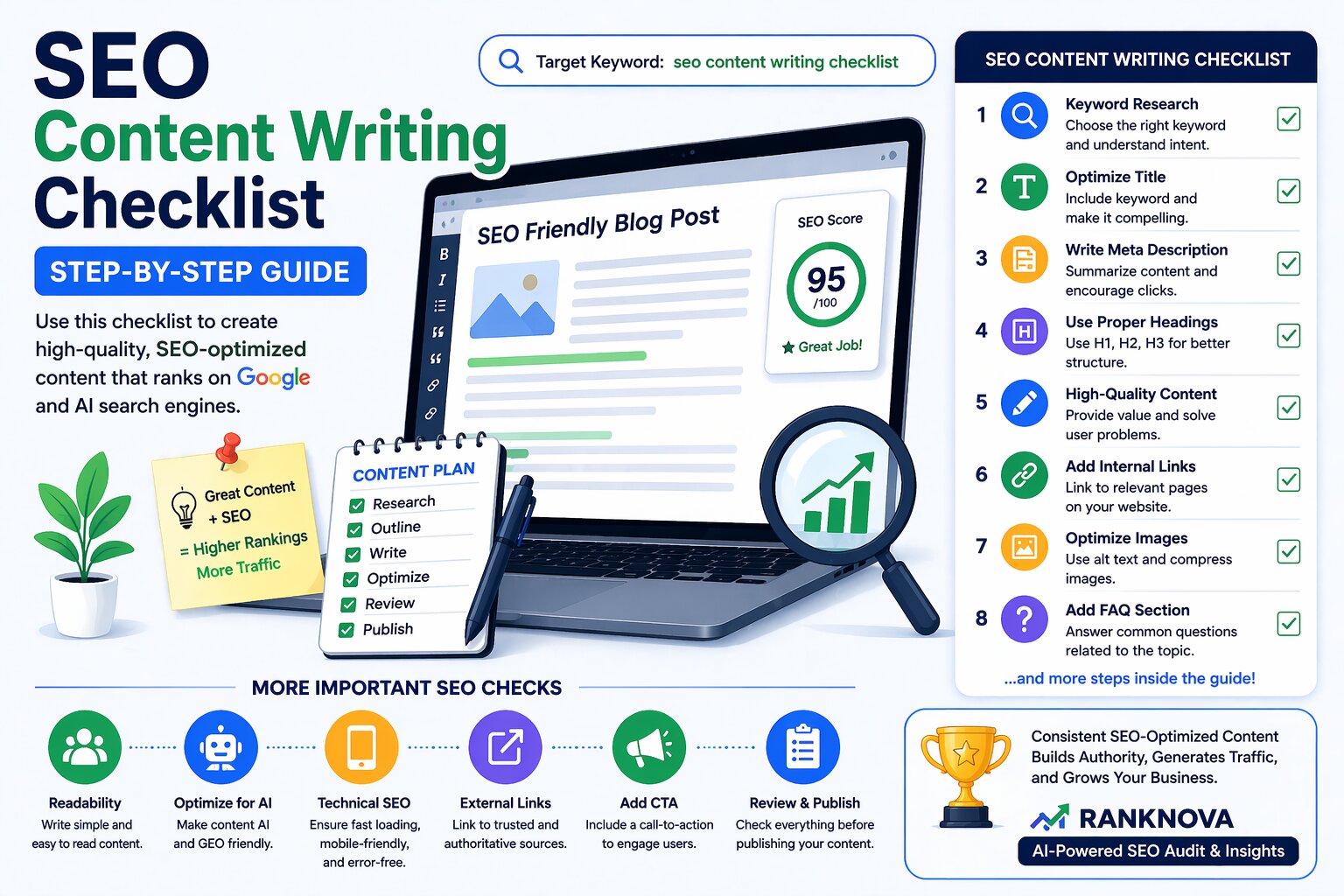
Step-by-Step Guide to Writing SEO Blog Posts
1. Start with Keyword Research
Choose the right keyword before writing. Example Primary Keyword: how to write blog posts that rank. Use long-tail keywords for better results. See our Keyword Research Guide.
2. Understand Search Intent
Search intent means what users want. Ask yourself: Are they looking for a guide? Do they want tips or examples? Match your content with that intent.
3. Create a Strong Title
Your title should include your keyword. Example: How to Write Blog Posts That Rank on Google. Good titles improve click-through rates.
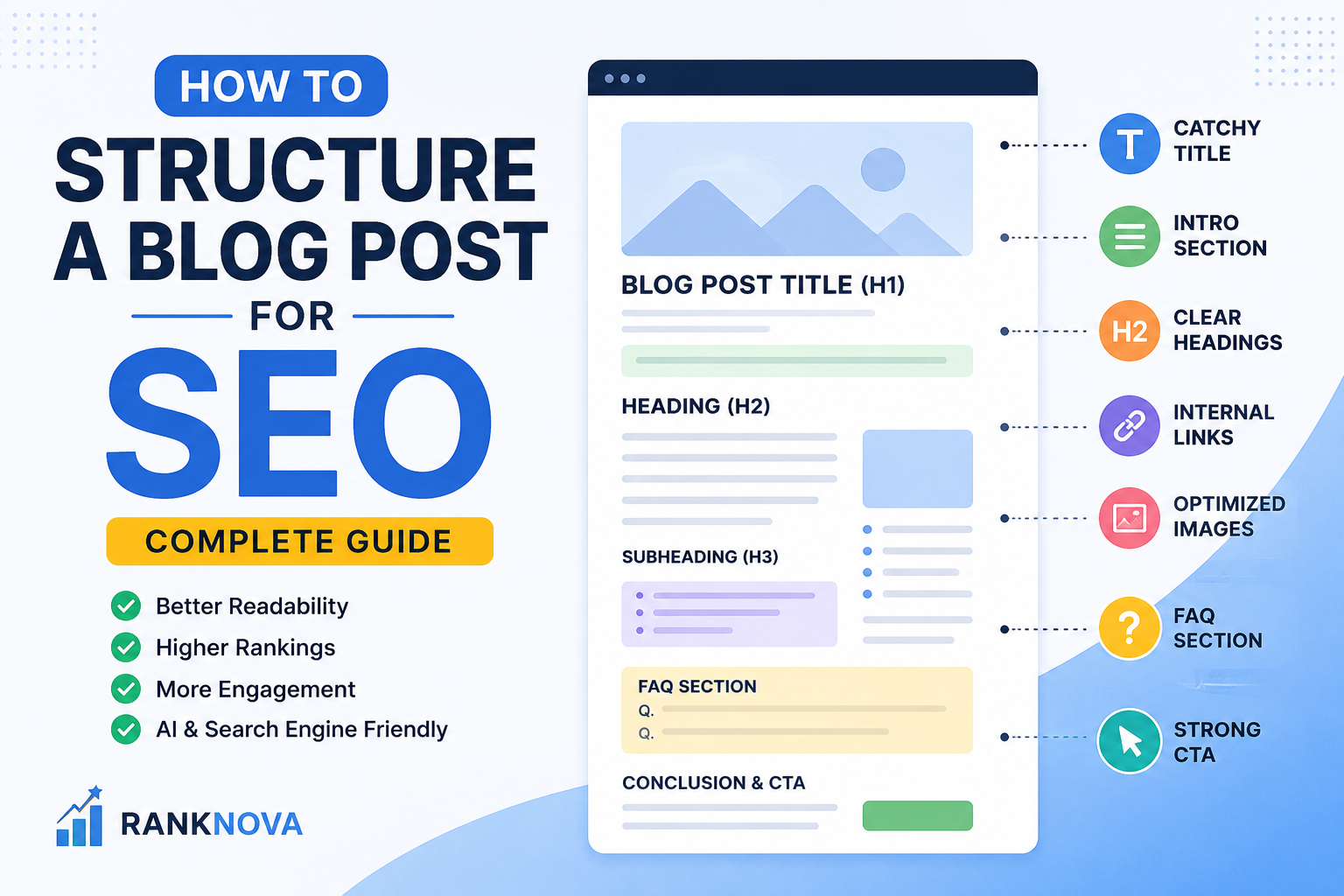
4. Use Proper Headings Structure
Structure your content using a logical hierarchy:
- H1 → Main topic
- H2 → Major sections
- H3 → Specific details
Follow our On-Page SEO Checklist.
5. Write High-Quality Content
Content should solve user problems, provide value, and be easy to understand. Avoid "thin" content that lacks depth.
6. Use Keywords Naturally
Add keywords in your title, headings, and throughout the content. Do not overuse keywords (keyword stuffing).
7. Add Internal Links
Internal links improve site structure and SEO. Link to your SEO checklist, technical SEO guide, or keyword research articles.
8. Add FAQ Section
FAQs improve visibility in Google and AI search results. Learn more in What is GEO.
9. Optimize Readability
Make content digestible using short paragraphs, bullet points, and simple language. Readable content performs better.
10. Optimize for AI Search (GEO)
AI tools prefer structured content and clear answers. Learn more in How to Optimize for ChatGPT Search.
11. Improve Technical SEO
Ensure your page loads fast, is mobile-friendly, and has no errors. Follow our Technical SEO Checklist.
12. Update Content Regularly
SEO is ongoing. Update blogs to add new information, improve structure, and fix outdated content.
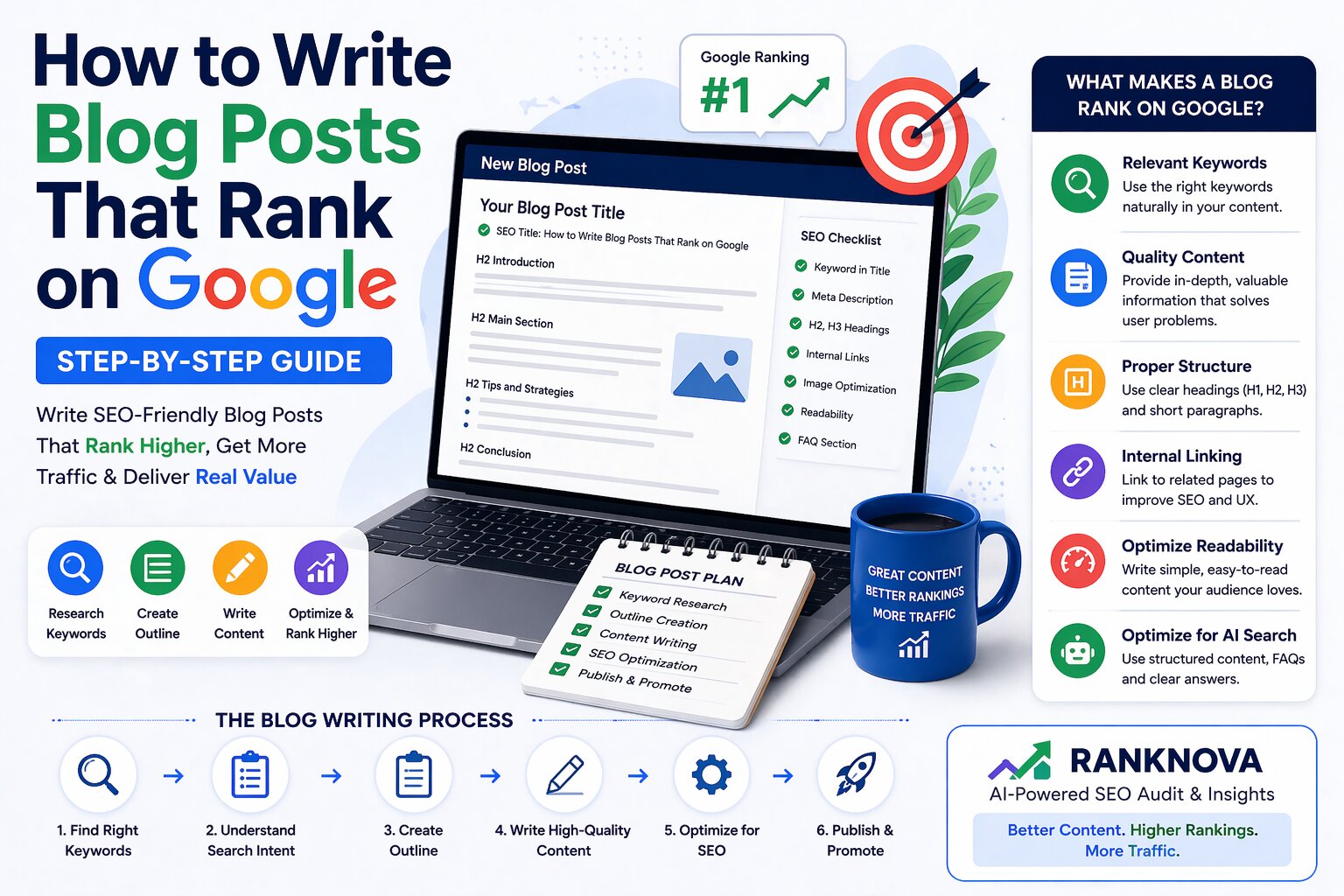
Example Blog Writing Process
- Keyword research
- Create an outline
- Write content
- Optimize headings
- Add internal/external links
- Publish
How Ranknova Helps
Ranknova helps optimize blog content by detecting SEO issues, suggesting improvements, and optimizing for AI search patterns.
Conclusion
Writing blog posts that rank requires strategy. Focus on keyword research, structured content, and user intent to improve your rankings.
CTA
👉 Use Ranknova to optimize your blog posts and improve rankings.
FAQ
Frequently Asked Questions
Quick answers pulled directly from this article for easier reading and better sharing previews.
How do I write SEO-friendly blogs?
Use keywords, structure content, and provide value.
How long should a blog be?
Long enough to cover the topic completely.
How important is keyword research?
Very important for ranking.
Can Ranknova help optimize blogs?
Yes, it provides SEO suggestions.