What is Generative Engine Optimization (GEO)? Beginner Guide
Search is evolving fast.
People are no longer only searching on Google—they are also using AI-powered tools that generate answers instantly. This shift has introduced a new concept called Generative Engine Optimization (GEO).
In this guide, you’ll learn what GEO is, why it matters, and how to optimize your website for AI-powered search engines.
Want to dive deeper? Read our guide on How AI is Changing SEO.
What is Generative Engine Optimization (GEO)?
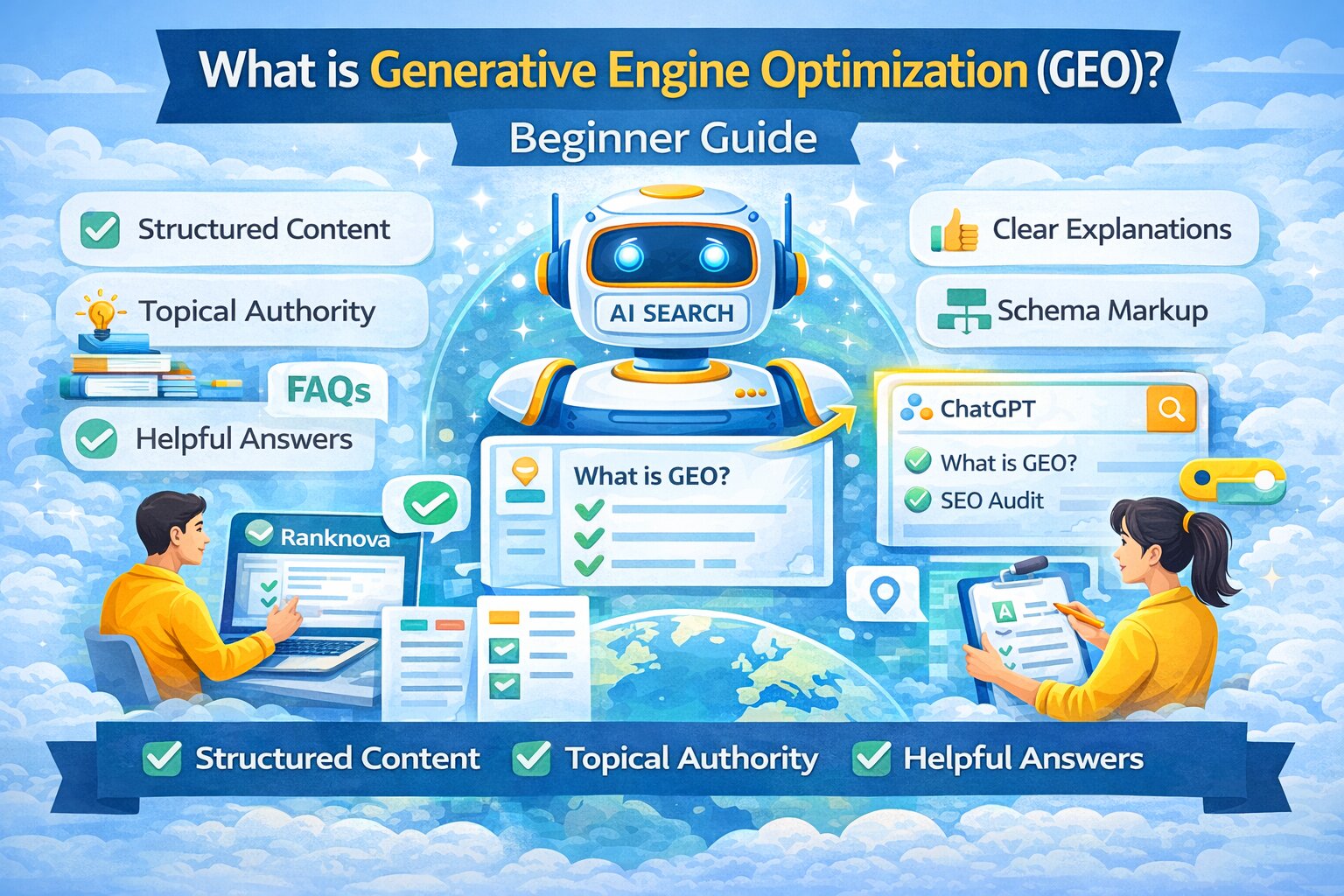
Generative Engine Optimization (GEO) is the process of optimizing your website content so AI tools can understand and recommend it in generated answers.
Unlike traditional search engines that show a list of links, AI search engines generate direct responses. Common examples include:
- AI chat search tools
- Answer engines (like Perplexity or SearchGPT)
- AI assistants
- Conversational search platforms
These tools analyze content and generate summarized answers. If your content is not structured properly, AI tools may ignore it.
GEO vs. Traditional SEO
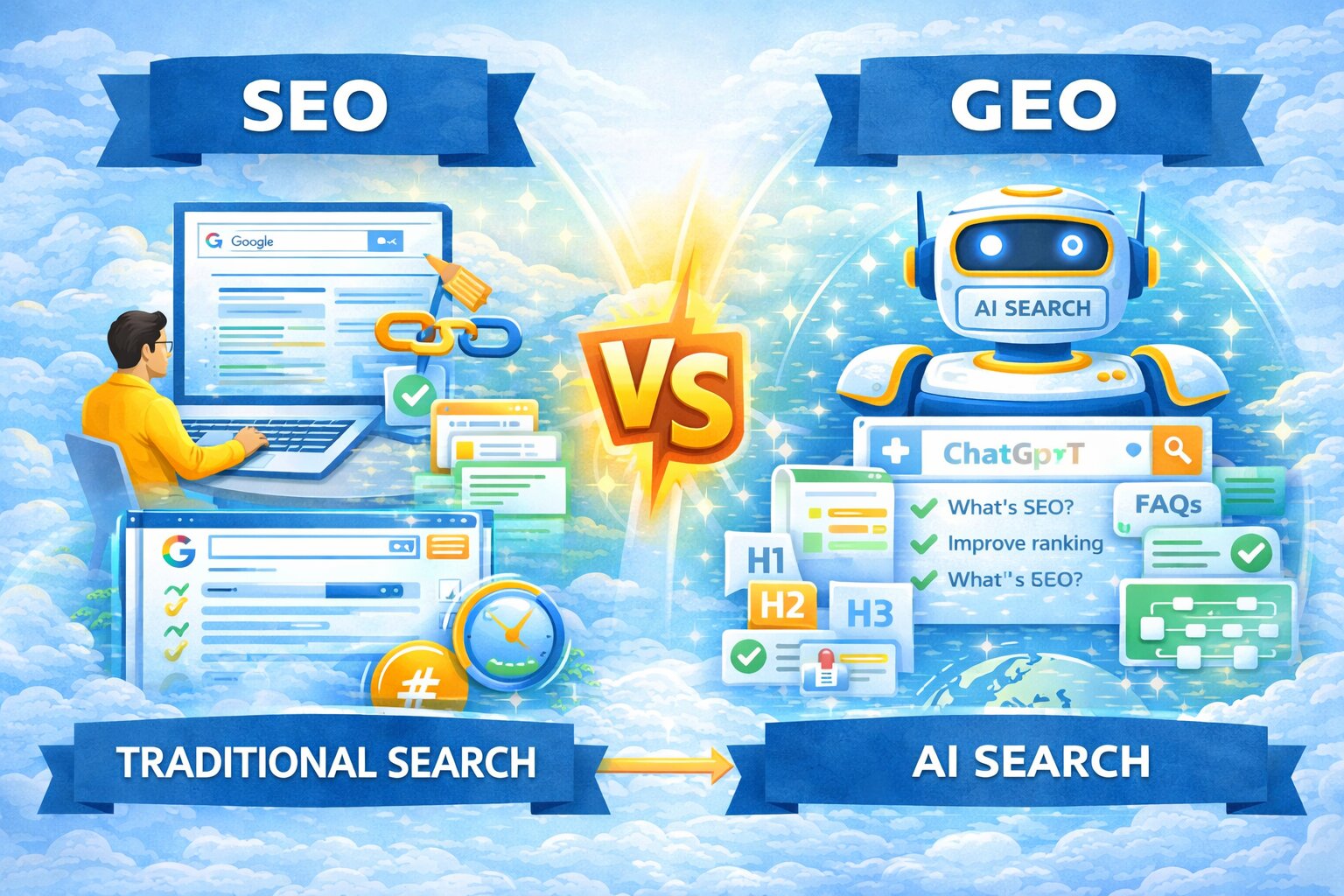
While Traditional SEO focuses on ranking higher in search engine results pages (SERPs), GEO focuses on making your content "digestible" for AI systems.
FeatureTraditional SEOGEOCore FocusKeywords & BacklinksContext & UnderstandingKey MetricsRankings, CTRCitations, In-answer visibilityContent StyleOptimized for humans/crawlersStructured for AI synthesis
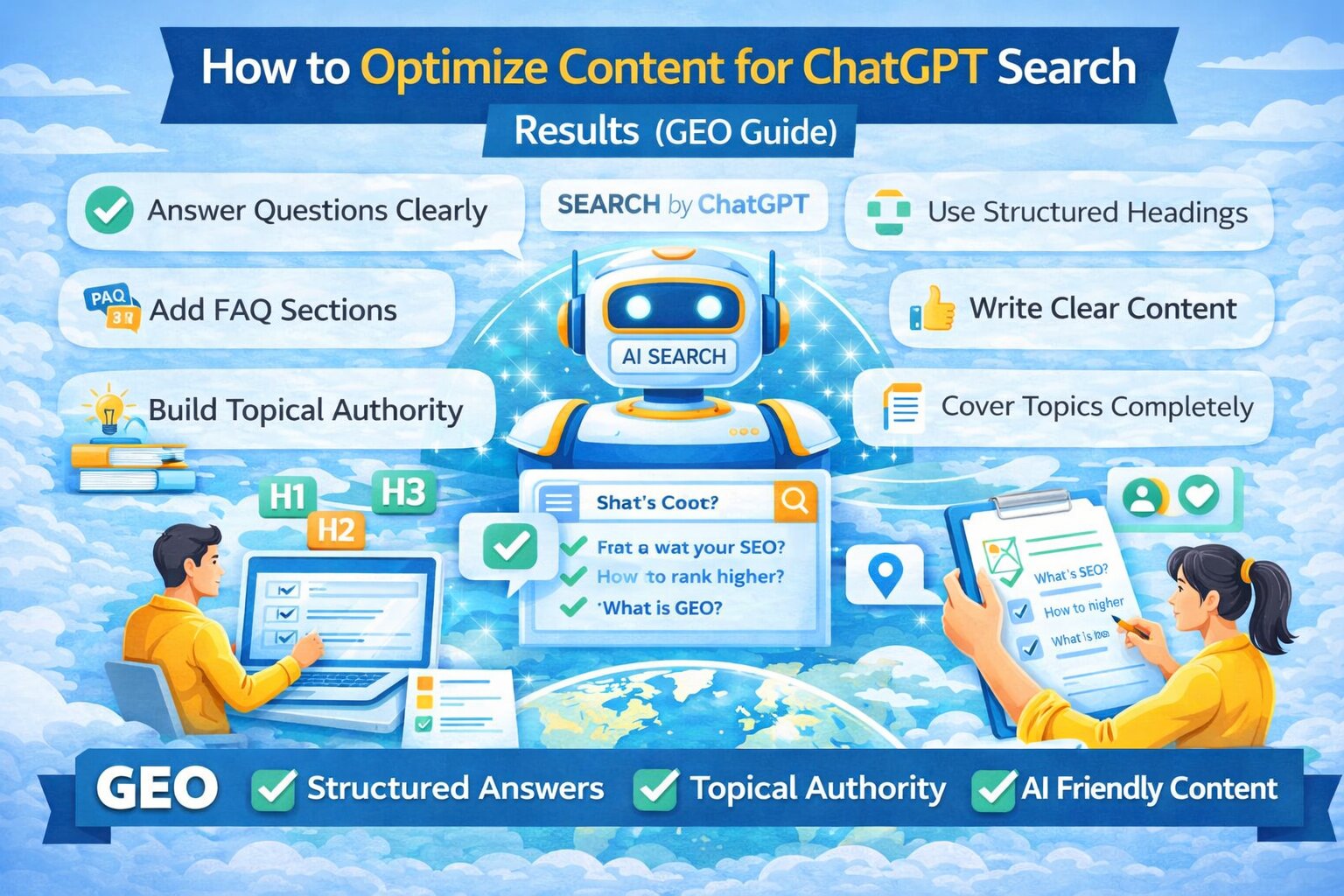
How to Optimize for GEO: 6 Practical Steps
1. Write Clear and Direct Answers
Avoid complex jargon. AI models prefer simple explanations and a logical flow. If you can answer a question in the first paragraph, do it.
2. Add FAQ Sections
FAQ sections help AI tools identify key questions and answers immediately. Refer to our On-Page SEO Checklist for more on this.
3. Use Structured Headings (H1-H3)
Organize content using a strict hierarchy. This allows AI to "map" your content easily.
4. Build Topical Authority
AI prefers websites that cover topics deeply. Create content clusters. For example:
- SEO Audit Guide
- Technical SEO Deep-dive
- AI SEO Trends
5. Use Structured Data (Schema Markup)
Schema markup (JSON-LD) acts as a translator for AI. Focus on FAQPage, BlogPosting, and Organization tags.
6. Focus on Helpful Content
Solve user problems rather than stuffing keywords. Quality is the best optimization.
Ready to boost your visibility?
Run your free SEO audit with Ranknova and improve both SEO and GEO visibility today.
FAQ
Frequently Asked Questions
Quick answers pulled directly from this article for easier reading and better sharing previews.
What is GEO in SEO?
GEO is the process of optimizing content for AI-powered search engines that generate answers rather than just listing links.
Is GEO replacing SEO?
No. GEO complements SEO. You still need technical SEO for visibility, but GEO ensures you are cited by AI models.