Internal Linking Strategy for SEO (Complete Guide)
Internal linking is one of the most underrated SEO strategies.
Many websites focus only on keywords and backlinks while ignoring how pages connect internally.
A strong internal linking strategy helps search engines understand website structure and improves user navigation.
In this guide, you’ll learn how internal linking works and how to use it effectively for SEO.
What is Internal Linking?
Internal links are links that connect pages within the same website.
Example:
- linking blog posts together
- linking service pages
- linking category pages
Internal links help users and search engines navigate content.
Why Internal Linking Matters
Internal linking helps:
- improve SEO rankings
- distribute authority across pages
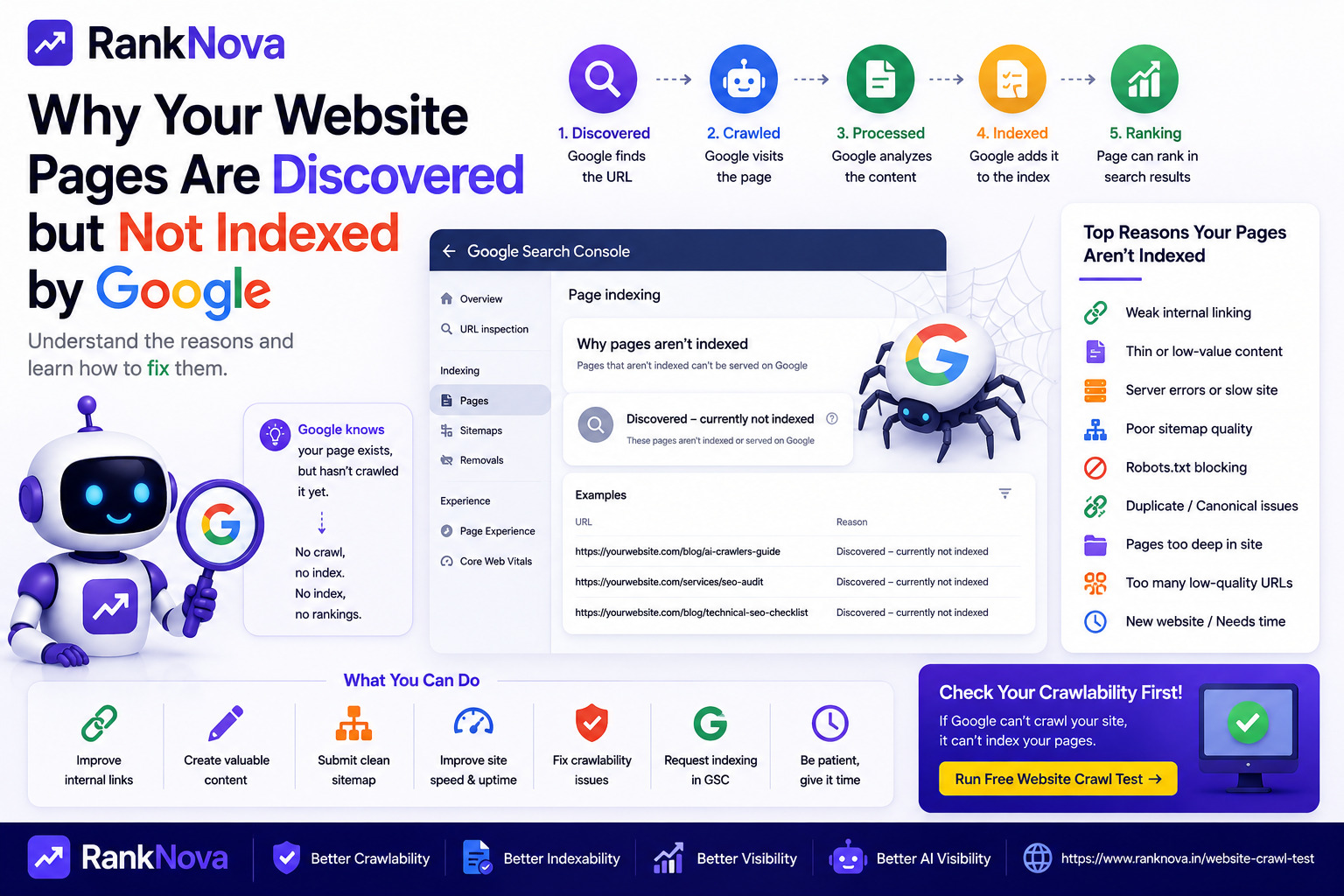
- improve crawling
- increase user engagement
- improve AI search visibility
Without internal links, important pages may remain hidden.
How Search Engines Use Internal Links
Search engines use internal links to:
- discover pages
- understand relationships
- identify important content
Well-linked pages are easier to crawl and index.
Types of Internal Links
1. Navigation Links
Main menu links.
2. Contextual Links
Links inside content.
These are most powerful for SEO.
3. Footer Links
Links placed in footer sections.
4. Related Content Links
Links to related blog posts.
These improve engagement.
Best Practices for Internal Linking
1. Use Descriptive Anchor Text
Bad: click here
Good: SEO content writing checklist
Anchor text helps search engines understand linked pages.
2. Link Related Content
Only link relevant pages.
Example:
- keyword research guide
- SEO checklist
- AI SEO guide
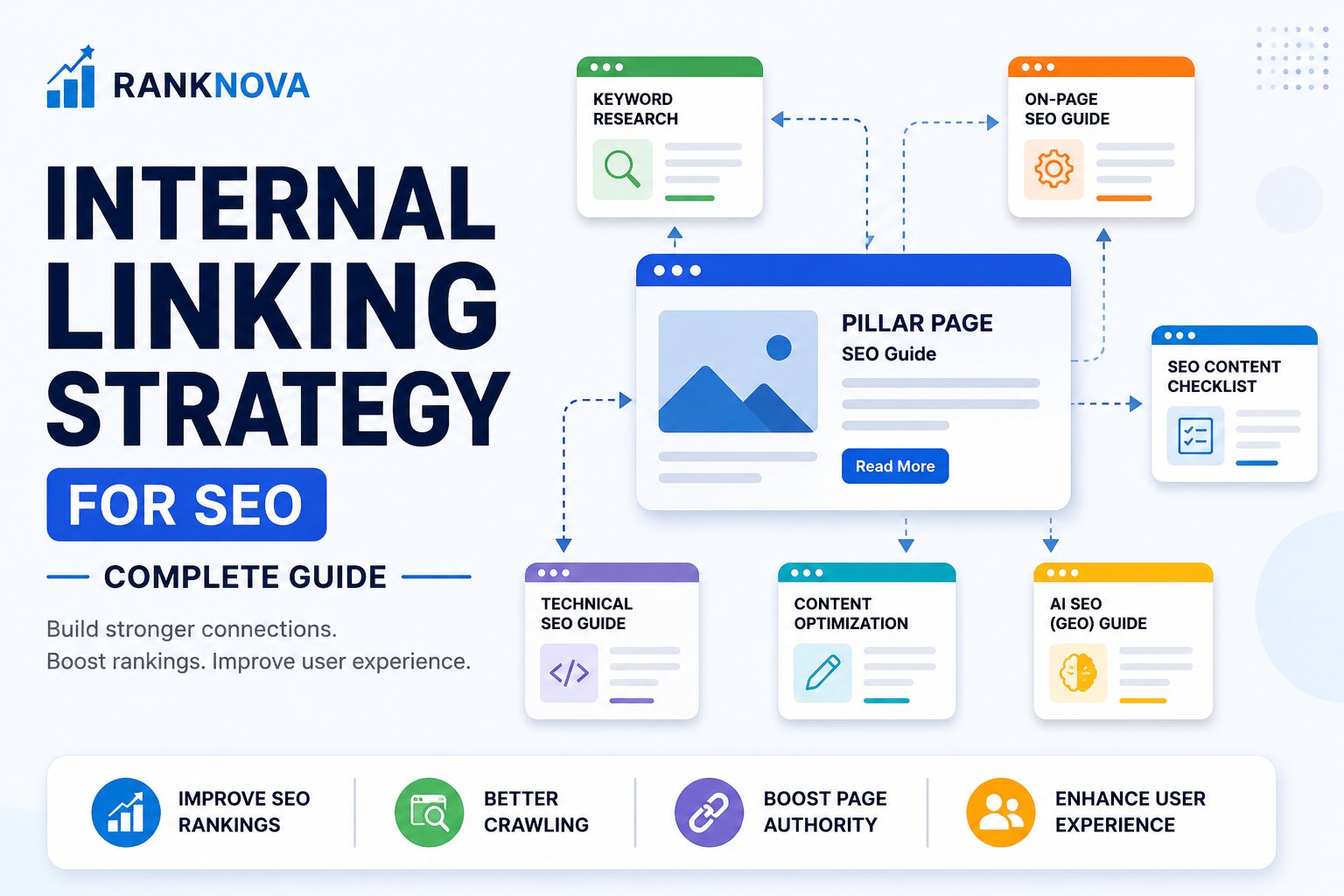
3. Build Topic Clusters
Create connected content around one topic.
Example cluster:
- SEO basics
- keyword research
- technical SEO
- content optimization
Clusters improve authority.
4. Avoid Too Many Links
Too many links reduce value.
Keep links relevant and useful.
5. Update Old Content
Add internal links to older blogs.
This improves crawling and engagement.
Internal Linking and AI Search (GEO)
AI systems use content relationships to understand context.
Internal links help AI understand:
- topic depth
- content hierarchy
- related discussions
Good internal linking improves GEO visibility.
Common Internal Linking Mistakes
Avoid:
- broken links
- irrelevant links
- generic anchor text
- orphan pages
These issues hurt SEO.
How Ranknova Helps
Ranknova helps identify:
- missing internal links
- orphan pages
- weak structure
- SEO gaps
It helps improve website organization and AI visibility.
Conclusion
Internal linking is essential for SEO and user experience.
A proper strategy improves rankings, crawling, engagement, and AI search visibility.
Start building structured internal links across your website.
CTA
👉 Use Ranknova to identify internal linking opportunities and improve your SEO structure.
FAQ
Frequently Asked Questions
Quick answers pulled directly from this article for easier reading and better sharing previews.
What is internal linking in SEO?
Internal linking connects pages within the same website to improve navigation and SEO.
Why are internal links important?
They help search engines understand website structure and improve crawling.
What is anchor text?
Anchor text is the clickable text used for a hyperlink.
Can internal linking improve AI visibility?
Yes, internal linking helps AI systems understand topic relationships and content hierarchy.