How to Check If Your Website Is Ready for AI Search
Search is changing.
Earlier, most businesses only focused on Google rankings. They wanted to appear on page one for important keywords and get more organic traffic.
That is still important.
But now, users are also asking AI platforms like ChatGPT, Gemini, Perplexity, Claude, Bing Copilot, and Google AI-powered search experiences for answers, product suggestions, service comparisons, and business recommendations.
This means your website needs to be ready for both traditional search engines and AI search engines.
If AI systems cannot access, understand, or trust your website, your business may be missing from AI-generated answers.
In this guide, we will explain how to check if your website is ready for AI search and what you should improve for better SEO and GEO visibility.
What Is AI Search?
AI search is a new way users discover information through AI-powered answers instead of only traditional search results.
In traditional search, users type a keyword and see a list of website links.
In AI search, users ask a question and receive a summarized answer, recommendation, comparison, or explanation.
For example, instead of searching:
best SEO audit tool
A user may ask:
Which tool can help me check SEO issues and AI visibility for my website?
AI search platforms may then generate an answer using information from multiple sources.
This changes how businesses should think about visibility.
Why AI Search Readiness Matters
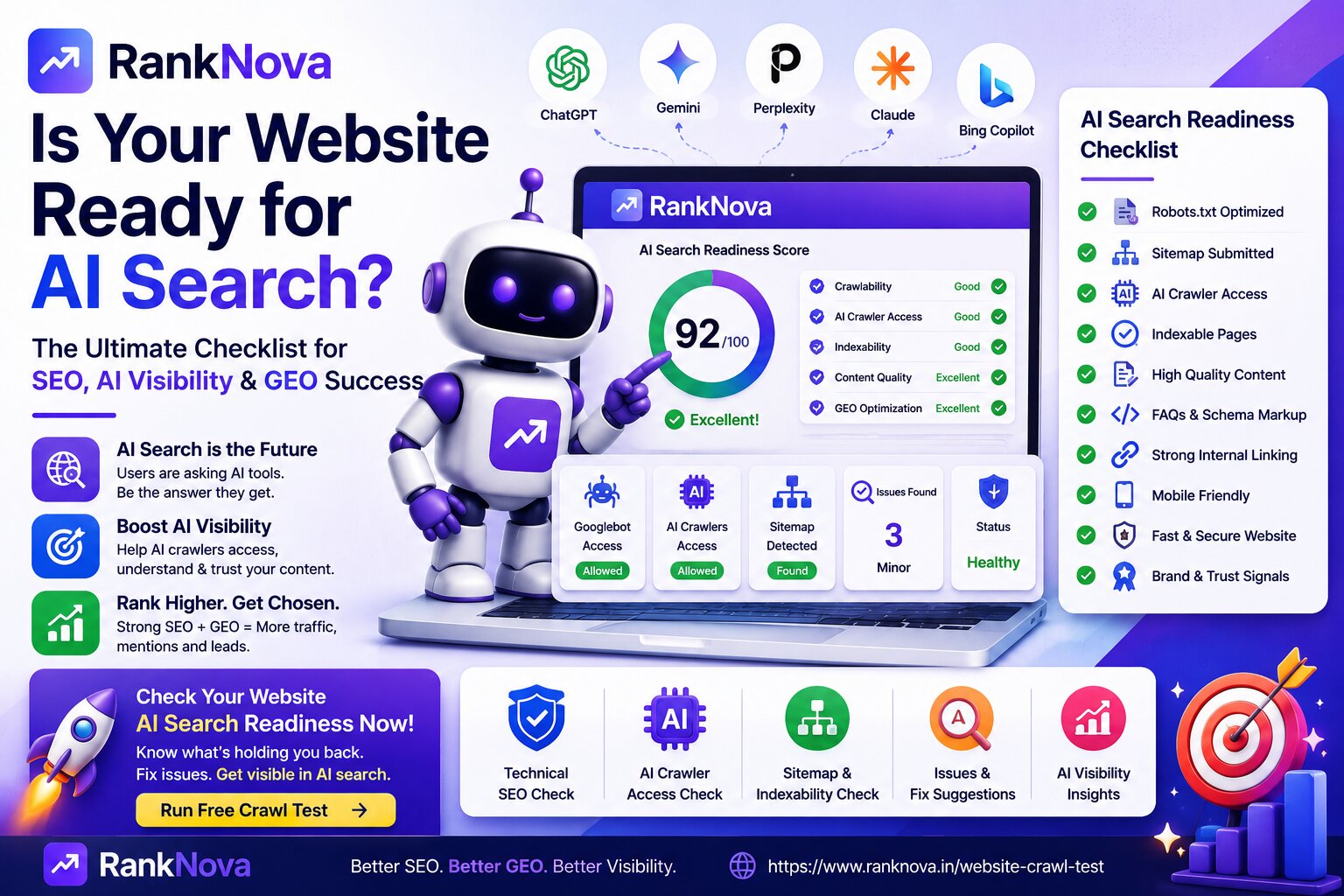
AI search readiness means your website is prepared to be discovered, understood, and trusted by AI-powered search systems.
A website that is ready for AI search usually has:
- Strong technical SEO
- Clear crawlability
- AI crawler access
- Helpful content
- Structured pages
- Clear brand information
- Schema markup
- Trust signals
- Good internal linking
- Consistent business details
- Topic authority
If your website is not ready, AI systems may not understand what your business does or why it should be recommended.
SEO vs GEO: Why Both Matter
SEO stands for Search Engine Optimization.
SEO helps your website rank on search engines like Google and Bing.
GEO stands for Generative Engine Optimization.
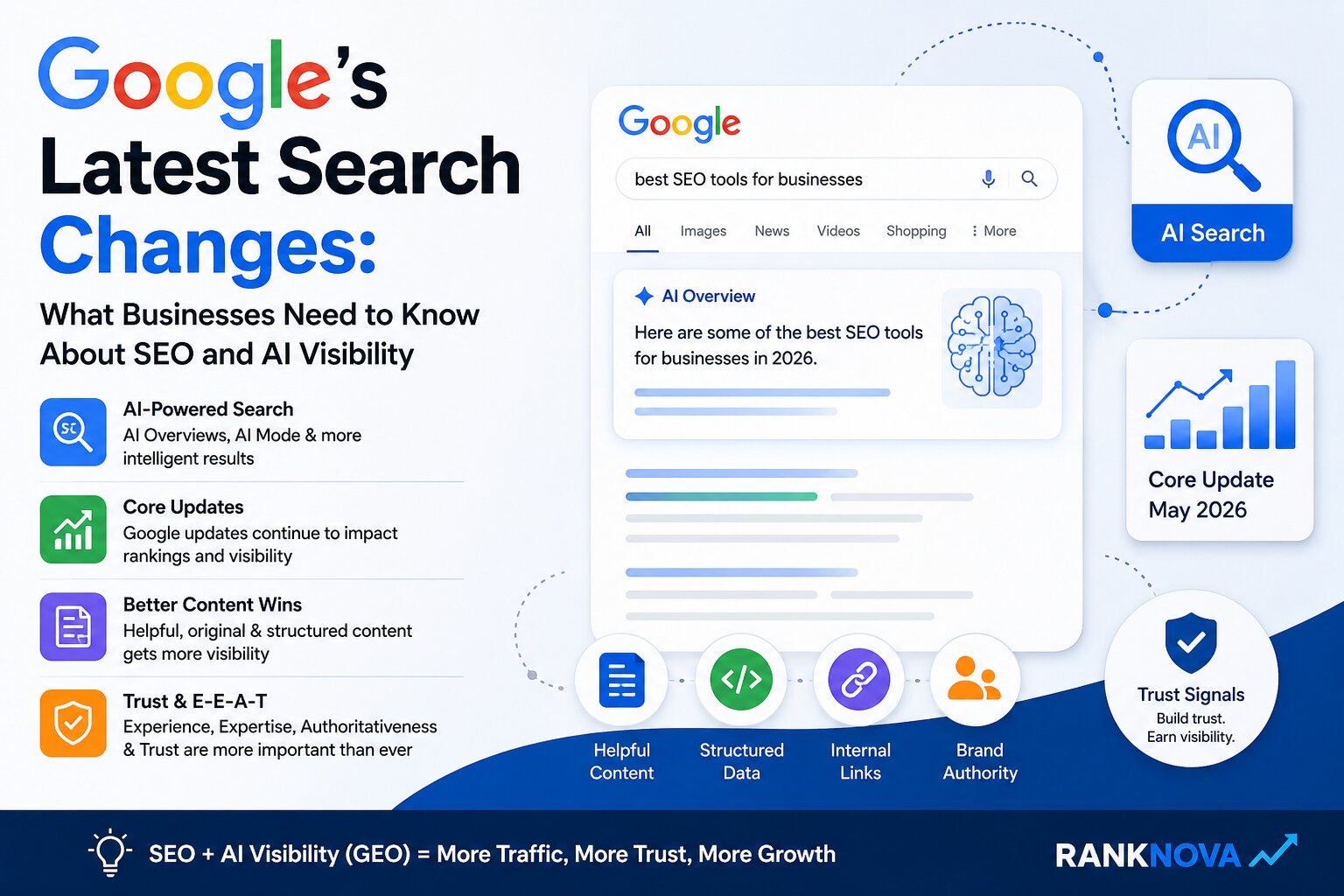
GEO helps your brand become visible in AI-generated answers from tools like ChatGPT, Gemini, Claude, Perplexity, and AI-powered search experiences.
SEO focuses on rankings, traffic, keywords, crawlability, backlinks, and technical health.
GEO focuses on AI mentions, entity clarity, content structure, trust signals, citations, and brand understanding.
Modern websites need both.
SEO helps users find you on Google.
GEO helps AI systems understand and recommend your business.
AI Search Readiness Checklist
Use this checklist to check if your website is ready for AI search.
1. Check If Search Engines Can Crawl Your Website
Before your website can rank or appear in AI-powered search, crawlers need to access your content.
Start by checking whether Googlebot and Bingbot can crawl your website.
Important crawlability checks include:
- Is your robots.txt file available?
- Is Googlebot allowed?
- Is Bingbot allowed?
- Are important pages blocked?
- Is your sitemap available?
- Are important pages internally linked?
- Are pages returning proper 200 status codes?
- Are there server errors or redirect issues?
If crawlers cannot access your pages, your visibility will be limited.
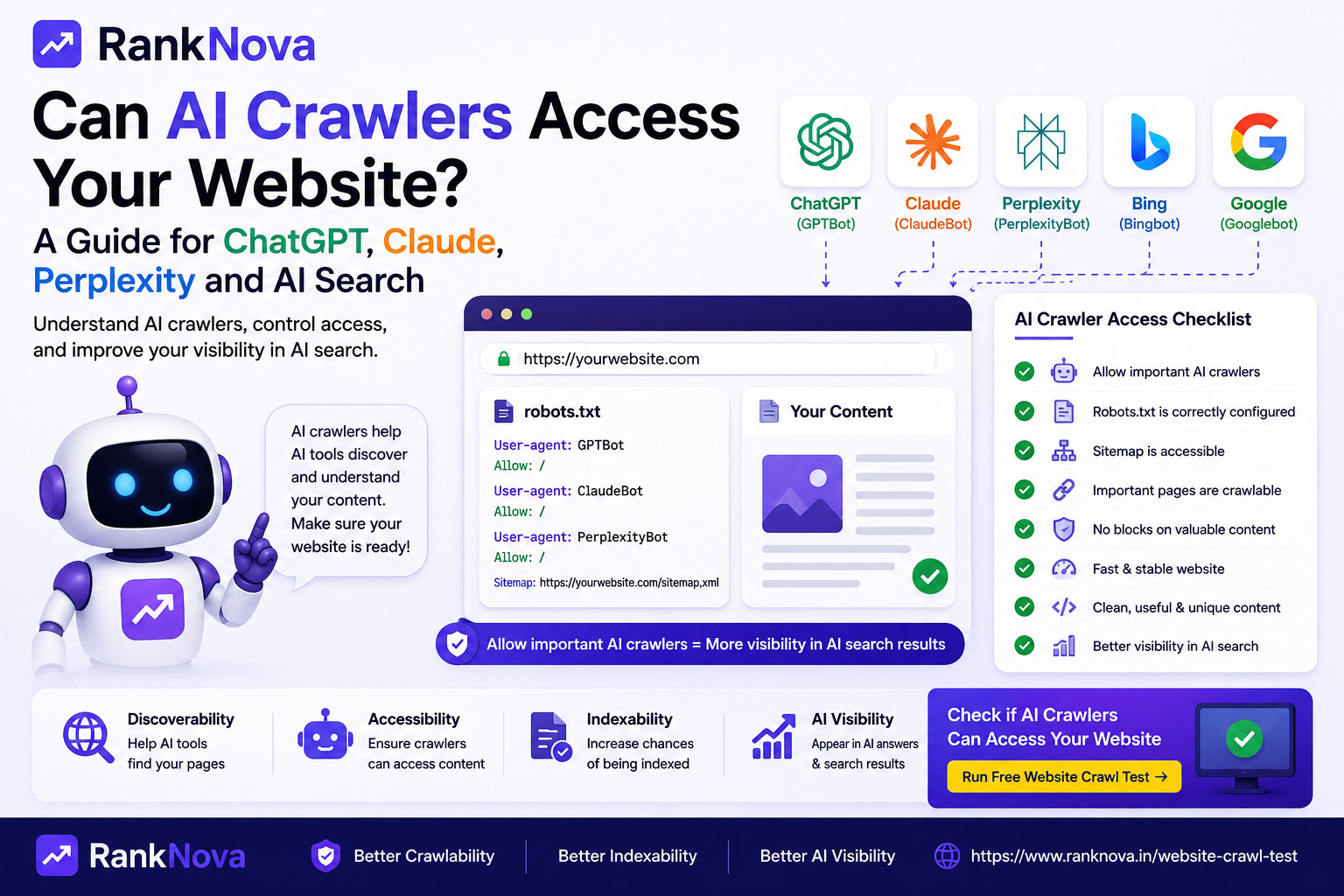
2. Check AI Crawler Access
AI crawler access is becoming important for AI visibility and GEO.
Your website may need to be accessible to AI-related crawlers, depending on your business goals and content strategy.
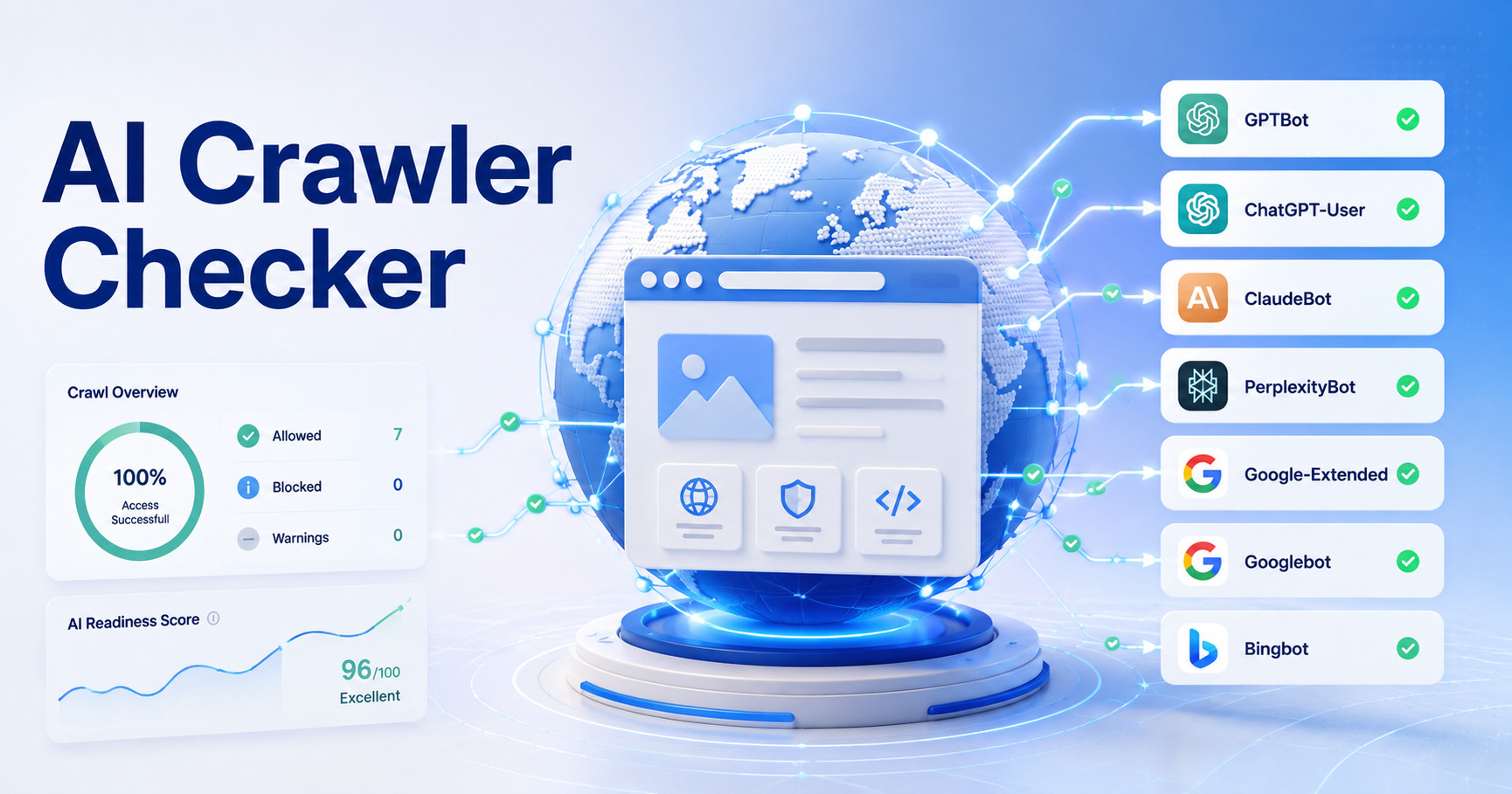
Common AI-related crawlers and user agents include:
- GPTBot
- ChatGPT-User
- ClaudeBot
- PerplexityBot
- Google-Extended
- Bingbot
You should check your robots.txt file to see whether these crawlers are allowed or blocked.
Your public pages should usually be accessible if your goal is AI visibility.
Private areas, dashboards, admin pages, checkout pages, and account pages should usually remain blocked.
3. Check Your Robots.txt File
Robots.txt is a small file that tells crawlers which parts of your website they can or cannot access.
It is usually available at:
https://yourdomain.com/robots.txt
A wrong robots.txt rule can block Google, Bing, or AI crawlers from accessing your website.
For example:
User-agent: *
Disallow: /
This blocks all crawlers from the entire website.
That can seriously hurt SEO and AI visibility.
Your robots.txt file should be simple, clean, and intentional.
It should not block important pages like:
- Homepage
- Service pages
- Product pages
- Blog posts
- Case studies
- FAQs
- Contact page
- Location pages
4. Check Your Sitemap
A sitemap helps search engines and crawlers discover important pages on your website.
Your sitemap is usually available at:
https://yourdomain.com/sitemap.xml
A good sitemap should include your important live pages.
Common sitemap issues include:
- Sitemap not found
- Sitemap contains broken URLs
- Sitemap includes redirected URLs
- Sitemap includes noindex pages
- Sitemap includes old deleted pages
- Sitemap is not added in robots.txt
For AI search readiness, your sitemap should help crawlers understand your website structure clearly.
5. Check Indexability Signals
Crawling and indexing are different.
Crawling means a bot can access your page.
Indexing means a search engine can store and show your page in search results.
Important pages should be both crawlable and indexable.
Check for:
- Accidental noindex tags
- Wrong canonical tags
- X-Robots-Tag headers
- Duplicate content issues
- Soft 404 pages
- Thin content
- Broken status codes
A page may be accessible, but if it has a noindex tag, it may not appear in search results.
6. Check If Your Brand Is Clearly Explained
AI systems need to understand who you are, what you do, and who you help.
Your website should clearly explain:
- Business name
- Services
- Target audience
- Industry
- Location or service area
- Unique value proposition
- Contact details
- Social profiles
- Proof of work
If your website does not clearly explain your brand, AI systems may not confidently recommend you.
A strong About page and clear service pages are important for AI visibility.
7. Check Your Service Pages
Your service pages are important for both SEO and GEO.
Each service page should explain:
- What the service is
- Who it is for
- What problems it solves
- How your process works
- Benefits of the service
- FAQs
- Case studies or examples
- Clear call to action
Weak or thin service pages can reduce your chances of ranking and appearing in AI-generated answers.
8. Check Content Quality
AI search favors content that is helpful, clear, and useful.
Avoid thin, generic, or keyword-stuffed content.
Good AI-ready content should be:
- Helpful
- Original
- Easy to read
- Well structured
- Updated regularly
- Based on real expertise
- Written for user intent
- Supported by examples
- Connected to related pages
Your blogs should answer real questions your customers ask.
For example:
- Why is Google not crawling my website?
- What is GEO?
- How can I improve AI visibility?
- How do I check my website SEO?
- What is the difference between SEO and GEO?
Question-based content works well because AI search is often conversational.
9. Check Heading Structure
Clear heading structure helps users, search engines, and AI systems understand your content.
Each page should have:
- One clear H1 heading
- Logical H2 sections
- H3 sub-sections where needed
- Short paragraphs
- Clear explanations
- Bullets or tables when useful
Poor structure makes content harder to understand.
AI search systems need clean, organized content to identify useful answers.
10. Add FAQ Sections
FAQ sections are very useful for AI search readiness.
Users ask AI platforms direct questions, and FAQ content helps answer those questions clearly.
Add FAQs to important pages such as:
- Homepage
- Service pages
- Product pages
- Blog posts
- Pricing page
- Contact page
Good FAQ questions should match real customer intent.
Example questions:
- What is AI visibility?
- How does GEO help my business?
- Can RankNova check AI crawler access?
- Why is my website not ranking?
- How do I check if Google can crawl my website?
11. Use Structured Data
Structured data helps search engines understand your content more clearly.
Useful schema types include:
- Organization schema
- Website schema
- Article schema
- FAQ schema
- Breadcrumb schema
- Product schema
- Service schema
- LocalBusiness schema
Schema markup does not guarantee rankings, but it improves content clarity.
For AI search readiness, structured data can help explain your brand, pages, articles, services, and FAQs.
12. Build Trust Signals
AI systems need trust signals to understand whether your business is credible.
Your website should include:
- About page
- Contact page
- Customer reviews
- Testimonials
- Case studies
- Author information
- Social media links
- Clear policies
- Business address or service area
- Real examples of work
Trust signals help both users and search systems feel more confident about your business.
13. Improve Internal Linking
Internal links help search engines and AI systems understand how your website pages are connected.
Good internal linking helps crawlers discover important pages and understand topic relationships.
You should link:
- Blogs to related service pages
- Service pages to relevant blogs
- Homepage to key pages
- FAQ content to detailed guides
- Feature pages to product pages
For example, a blog about crawlability should link to your Website Crawl Test page.
This helps users take action and helps crawlers understand page importance.
14. Check Page Speed and User Experience
Slow websites can hurt both SEO and user experience.
If your site loads slowly, users may leave and crawlers may crawl fewer pages.
Check for:
- Large images
- Heavy JavaScript
- Poor hosting
- Too many third-party scripts
- No caching
- Layout shifts
- Mobile usability issues
A fast and clean website gives better signals to both users and search systems.
15. Check Brand Consistency Across the Web
AI systems may look at information from multiple sources.
Your brand information should be consistent across:
- Website
- Google Business Profile
- Directories
- Review platforms
- Guest posts
- Press mentions
Make sure your business name, description, services, website URL, and contact details are consistent.
Consistency helps AI systems understand your brand as a clear entity.
16. Check If Your Content Is Citable
AI answer engines often prefer content that is easy to reference.
Your content should include:
- Clear definitions
- Direct answers
- Lists
- Examples
- Data where possible
- Updated information
- Strong page titles
- Author or brand context
If your content is vague or generic, it may be harder for AI systems to use it in answers.
17. Track AI Visibility
Traditional SEO tracking focuses on rankings, impressions, clicks, and traffic.
AI visibility tracking looks at whether your brand appears in AI-generated answers.
Useful AI visibility metrics include:
- Brand mentions in AI tools
- AI citations
- GEO score
- Visibility for important questions
- Competitor mentions in AI answers
- Topic authority signals
- Presence in AI-powered search results
This gives a better view of how discoverable your brand is in the new search environment.
How RankNova Helps You Check AI Search Readiness
RankNova helps businesses analyze both SEO and AI visibility.
With RankNova, you can check important signals such as:
- Website crawlability
- Robots.txt availability
- Googlebot access
- Bingbot access
- AI crawler access
- Sitemap detection
- Indexability signals
- Technical SEO warnings
- Content structure
- Metadata quality
- GEO readiness
- Keyword tracking
- Weekly performance insights
RankNova’s free Website Crawl Test is a strong first step for checking whether your website can be accessed by search engines and AI crawlers.
You can test your website here:
https://www.ranknova.in/website-crawl-test
AI Search Readiness Score: What to Review
When reviewing your website, think about five main areas:
1. Technical Access
Can search engines and AI crawlers access your important pages?
2. Content Clarity
Can AI systems understand what your business does?
3. Trust Signals
Does your website show credibility and authority?
4. Structured Information
Are your pages organized with headings, schema, FAQs, and clear internal links?
5. Brand Authority
Is your business mentioned and represented consistently across the web?
A strong AI-ready website performs well across all five areas.
Common AI Search Readiness Mistakes
Avoid these mistakes:
- Blocking all crawlers in robots.txt
- Blocking important service pages
- Missing sitemap
- Accidental noindex tags
- Thin service pages
- Generic AI-written content
- No FAQ sections
- No schema markup
- Weak About page
- No testimonials or case studies
- Poor internal linking
- Slow website speed
- Inconsistent brand information
- No AI visibility tracking
These mistakes can reduce your visibility across both search engines and AI platforms.
Final Thoughts
AI search is becoming an important part of online discovery.
Businesses can no longer think only about keyword rankings.
They also need to think about whether AI systems can access, understand, and trust their website.
A website that is ready for AI search has strong technical SEO, clean crawlability, clear content, structured data, trust signals, and consistent brand information.
SEO helps your website rank.
GEO helps your brand become visible in AI-generated answers.
Together, they create a stronger visibility strategy for the future of search.
Check Your Website AI Search Readiness with RankNova
Want to know if your website is ready for AI search?
Run a free Website Crawl Test with RankNova.
Check robots.txt, sitemap, Googlebot access, AI crawler access, indexability signals, and technical SEO risks in seconds.
FAQ
Frequently Asked Questions
Quick answers pulled directly from this article for easier reading and better sharing previews.
What does AI search readiness mean?
AI search readiness means your website is prepared to be accessed, understood, and trusted by AI-powered search systems such as ChatGPT, Gemini, Perplexity, Claude, Bing Copilot, and Google AI-powered search experiences.
How do I check if my website is ready for AI search?
You can check AI search readiness by reviewing crawlability, AI crawler access, robots.txt, sitemap, indexability, content quality, schema markup, trust signals, internal linking, and brand consistency.
Why is AI crawler access important?
AI crawler access is important because AI-powered systems may need to access and understand your public content before your brand can appear in AI-generated answers or recommendations.
What is the difference between SEO and GEO?
SEO helps your website rank on traditional search engines like Google, while GEO helps your brand become visible in AI-generated answers from platforms like ChatGPT, Gemini, Claude, Perplexity, and AI search engines.
Which pages should be ready for AI search?
Important public pages such as homepage, service pages, product pages, blog posts, FAQs, case studies, pricing pages, and contact pages should be structured and accessible for AI search readiness.
How can RankNova help with AI search readiness?
RankNova helps check website crawlability, robots.txt, sitemap, Googlebot access, AI crawler access, indexability signals, technical SEO warnings, GEO readiness, keyword tracking, and AI visibility insights.